

I’ve spent the better part of the last several months trading live accounts with both FXPrimus and XTB. Real money, real market conditions, real withdrawals. Not demos. The question that kept coming up in trader chats and my own notes was simple: FXPrimus vs XTB — which one actually delivers day-to-day?
Both have their strengths. One feels more like a pure forex shop built around MetaTrader. The other is a broader multi-asset platform with a polished proprietary interface and real stock ownership. The differences matter more than the marketing claims.
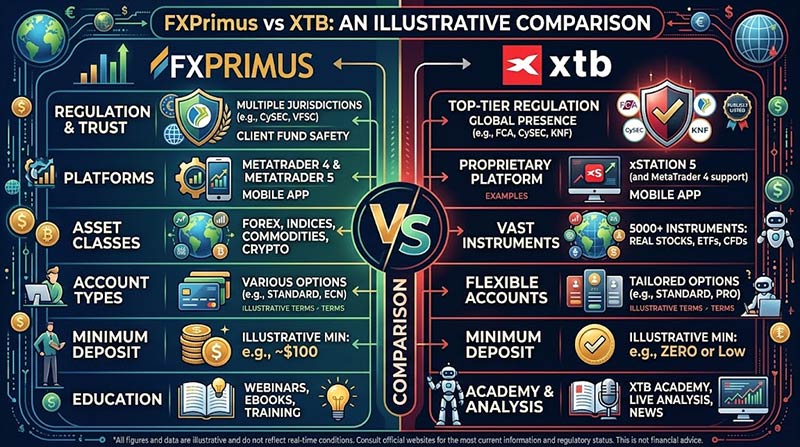
Here’s the honest breakdown after putting both through news events, quiet Asian sessions, and actual cash movements in 2026.
Quick Side-by-Side Comparison
| Feature | FXPrimus | XTB |
|---|---|---|
| Regulation | CySEC + VFSC (Vanuatu) | KNF, FCA, CySEC, DFSA + others (publicly listed) |
| Min. Deposit | From $15 (Classic) | $0 |
| Spreads (EUR/USD typical) | Classic ~1.5 pips; Pro/Zero tighter + commission | From ~0.8–0.9 pips (standard) |
| Platforms | MT4, MT5, WebTrader | xStation 5 only |
| Real Stocks & ETFs | Limited / mostly CFDs | Thousands of real stocks + ETFs (0% commission up to €100k/month) |
| Leverage (offshore) | Up to 1:2000 | Higher on international entity, ESMA limits on EU/UK |
| Withdrawal Speed (my tests) | Usually processed within 24h | Same day or next business day |
| Best For | MT users, high leverage, pure FX | Stocks/ETFs + CFDs, beginners, research |
Regulation & Safety
This is the first place I look, and the gap is clear.
XTB sits under multiple strong regulators: Polish KNF (home regulator and publicly listed on the Warsaw Stock Exchange), FCA in the UK, CySEC for EU clients, plus DFSA and others depending on the entity. Client funds are segregated, negative balance protection applies, and the public listing adds an extra layer of scrutiny. In my experience, that multi-jurisdiction setup felt more solid when markets got choppy.
FXPrimus runs a dual structure. The EU entity is CySEC-regulated (license 261/14), which is respectable and brings investor compensation up to €20,000 for eligible clients. The international side is under VFSC in Vanuatu. Offshore regulation is lighter by nature. I had no issues with fund safety during my testing period, and negative balance protection is in place, but the overall regulatory weight sits lighter than XTB’s setup. If you’re in the EU or UK, XTB’s licenses give more peace of mind. Outside those regions the difference narrows, but XTB still edges it.
Account Types & Minimum Deposit
XTB keeps it simple. One main account type, no minimum deposit. You can fund with whatever you’re comfortable risking. Islamic accounts are available. That zero barrier made starting easy.
FXPrimus offers more choice. Primus Classic starts from around $15 with wider spreads and no commission. Primus Pro needs $500 and tightens the spreads in exchange for a commission. Primus Zero starts higher (around $1,000) with raw spreads from 0.0 and lower commission. Leverage on the offshore entity can go up to 1:2000 on Classic, which is aggressive. I used the Pro account for most of my testing — the lower minimum on Classic is useful for smaller accounts, but the raw pricing on Zero/Pro is what serious volume traders will look at.
Spreads, Commissions & Trading Costs
Live trading costs are where theory meets the screen.
On XTB’s standard account I regularly saw EUR/USD around 0.8–0.9 pips during London open, sometimes tighter. No separate commission on CFDs. The real standout is the stock and ETF side: 0% commission up to €100,000 monthly turnover. After that it becomes 0.2%. Overnight fees were reasonable on the instruments I held.
FXPrimus Classic felt wider — often 1.3–1.6 pips on majors in normal conditions. Pro and Zero accounts brought the spreads down significantly (Pro from around 0.3, Zero from 0.0) but added commission ($8–$10 per lot on Pro depending on platform, $5 on Zero). During high-impact news the spreads widened on both brokers, which is normal. On pure forex volume the raw accounts at FXPrimus can compete, especially if you scale. For mixed stock + forex trading, XTB’s all-in pricing and free stock trading win on total cost.
Trading Platforms & Tools
This is one of the biggest practical differences.
XTB only offers its proprietary xStation 5 (web and mobile). No MetaTrader. I was skeptical at first because I’ve lived in MT4/MT5 for years. After a few weeks I preferred it for multi-asset work. Charts are clean, one-click trading works well, sentiment data is built in, economic calendar is integrated, and the stock scanner is genuinely useful. Positions sync across devices without fuss. It feels modern and less cluttered than MT. The downside is clear: if you run Expert Advisors or rely on the massive MT ecosystem, you’re out of luck.
FXPrimus sticks with MetaTrader 4, MetaTrader 5 and WebTrader. That means full EA support, custom indicators, and the familiar interface most pure forex traders already know. Execution felt solid in my tests — no major requotes during normal conditions. For someone who lives in MT and wants to keep their existing setups, FXPrimus is the straightforward choice. xStation is better if you want stocks, ETFs and research tools in one place without switching platforms.
Deposit & Withdrawal Methods + Real Experience
Both support bank wire, cards, and e-wallets (Skrill, Neteller etc.). FXPrimus also accepts crypto on the international side, which can be convenient.
My deposits were instant or near-instant on cards and e-wallets with both. Bank wires took the usual 1–3 business days (sometimes longer internationally).
Withdrawals were the real test. On XTB, requests submitted before the cutoff were usually processed the same or next business day. Funds hit my bank account within 1–3 days depending on the corridor. No broker-side fees above the small threshold in most cases. On FXPrimus, processing from their side was typically within 24 hours on business days. E-wallet withdrawals were faster; bank wires took longer once they left the broker. I had one minor delay on a bank withdrawal that required an extra document, but it resolved. Both were reliable enough that I never felt stuck.
Customer Support
Both offer live chat, email and phone. Response times on chat were usually under a few minutes during London hours. XTB’s multi-language support felt broader in my experience. FXPrimus was competent and polite. Neither left me hanging on account or technical questions.
Education & Research Resources
XTB is stronger here. The platform has integrated analysis, market scanners, educational courses, and regular content that goes beyond basic webinars. I found myself using their research more often than expected.
FXPrimus provides solid educational material and some third-party tools (Trading Central style analysis in some setups), but it doesn’t match the depth or integration of XTB’s offering. If you’re still building your process, XTB gives more to work with.
Asset Range
XTB wins by a clear margin if you want more than pure CFDs. Thousands of real stocks and ETFs (with actual ownership, not just contracts), plus forex, indices, commodities and crypto CFDs. Some regions even have options. You can build a proper portfolio and trade leveraged products from the same account.
FXPrimus focuses on CFDs across forex, metals, energies, indices, stock CFDs and crypto. The range is decent for active trading, but you’re mostly dealing in derivatives rather than owning the underlying. If your main activity is forex and you don’t care about real equities, this is fine. If you want to hold actual shares long-term, XTB is the better fit.
Pros and Cons
FXPrimus Pros
- MetaTrader 4 & 5 with full EA support
- Low entry deposit on Classic
- High leverage available on international entity
- Competitive raw pricing on Pro/Zero accounts
- Crypto deposit options
FXPrimus Cons
- Weaker overall regulatory footprint outside the CySEC entity
- Limited real stock/ETF ownership
- Wider spreads on the entry-level account
- Less polished research and education tools
XTB Pros
- Strong multi-jurisdiction regulation and public listing
- Excellent xStation platform for multi-asset trading
- Real stocks and ETFs with 0% commission up to the monthly threshold
- Zero minimum deposit
- Better integrated research and education
XTB Cons
- No MetaTrader (deal-breaker for many EA users)
- Spreads on pure forex are good but not the absolute tightest raw offering
- Stock trading beyond the free threshold starts to cost
Who Each Broker Is Best For
- Pure forex traders who live in MetaTrader and run EAs → FXPrimus. The platform familiarity and higher leverage options win.
- Traders who want real stocks, ETFs and CFDs in one account → XTB. The combination is hard to beat at this level.
- Beginners → XTB. Zero deposit barrier, cleaner education, and a more modern interface lower the learning curve.
- High-volume scalpers on raw spreads → FXPrimus Zero or Pro can be competitive once you clear the higher deposit.
- Someone who values regulatory depth and transparency → XTB.
After months of real trading, I keep coming back to XTB for most of my capital. The regulation feels stronger, the ability to own actual stocks and ETFs without commissions (within the limit) is genuinely useful, and xStation has grown on me more than I expected. It’s the more complete broker for anyone who isn’t locked into MetaTrader.
That said, if your entire strategy depends on MT4/MT5 Expert Advisors or you specifically want the higher leverage available on the offshore side, FXPrimus is a legitimate option and has been reliable in my testing. The XTB vs FXPrimus decision ultimately comes down to platform preference and whether real equity ownership matters to you.
For most traders reading this in 2026, XTB is the better overall choice. Test both with small amounts if you’re still unsure — the difference becomes obvious once you trade through a few news events and pull money out.
FAQ
Which is better overall: FXPrimus or XTB?
XTB for most traders because of stronger regulation, real stocks/ETFs, and the xStation platform. FXPrimus if you need MetaTrader and high leverage.
Is FXPrimus safe?
The CySEC entity offers solid EU-level protection. The Vanuatu side is more typical offshore regulation. I had no safety issues, but XTB’s multi-license and listed status feel more robust.
Does XTB offer MetaTrader?
No. Only xStation 5. If MT is non-negotiable, look at FXPrimus instead.
What are the real trading costs on each?
XTB standard spreads are competitive with no commission on CFDs and free stock trading up to a high monthly threshold. FXPrimus Classic is wider; the raw accounts tighten spreads but add commission.
How long do withdrawals take?
Both usually process on their side within 24 hours or the next business day. Full arrival depends on your bank or e-wallet — typically 1–3 days in my experience.
Can I trade real stocks on FXPrimus?
Most of the stock offering is CFD-based. XTB gives actual ownership of thousands of stocks and ETFs.

•Most Trusted Broker — Asia 2026
•Broker of the Year — LATAM 2026
These awards confirm our commitment to building a rewarding trading environment and helping you uncover your potential. Thank you for choosing to trade with an award-winning broker!
Why choose MetaTrader 5 with Top Forex Brokers?
•Blazing-fast execution & enhanced stability
•38 built-in technical indicators & 21 timeframes for precision trading
•Optimized for all devices—desktop, mobile & web
•Trade a wide range of assets: Stocks, Commodities, Forex & more!
Disclaimer: Trading forex and CFDs carries a high level of risk and may not be suitable for all investors. Ensure you understand the risks involved and consider your financial situation before trading.